
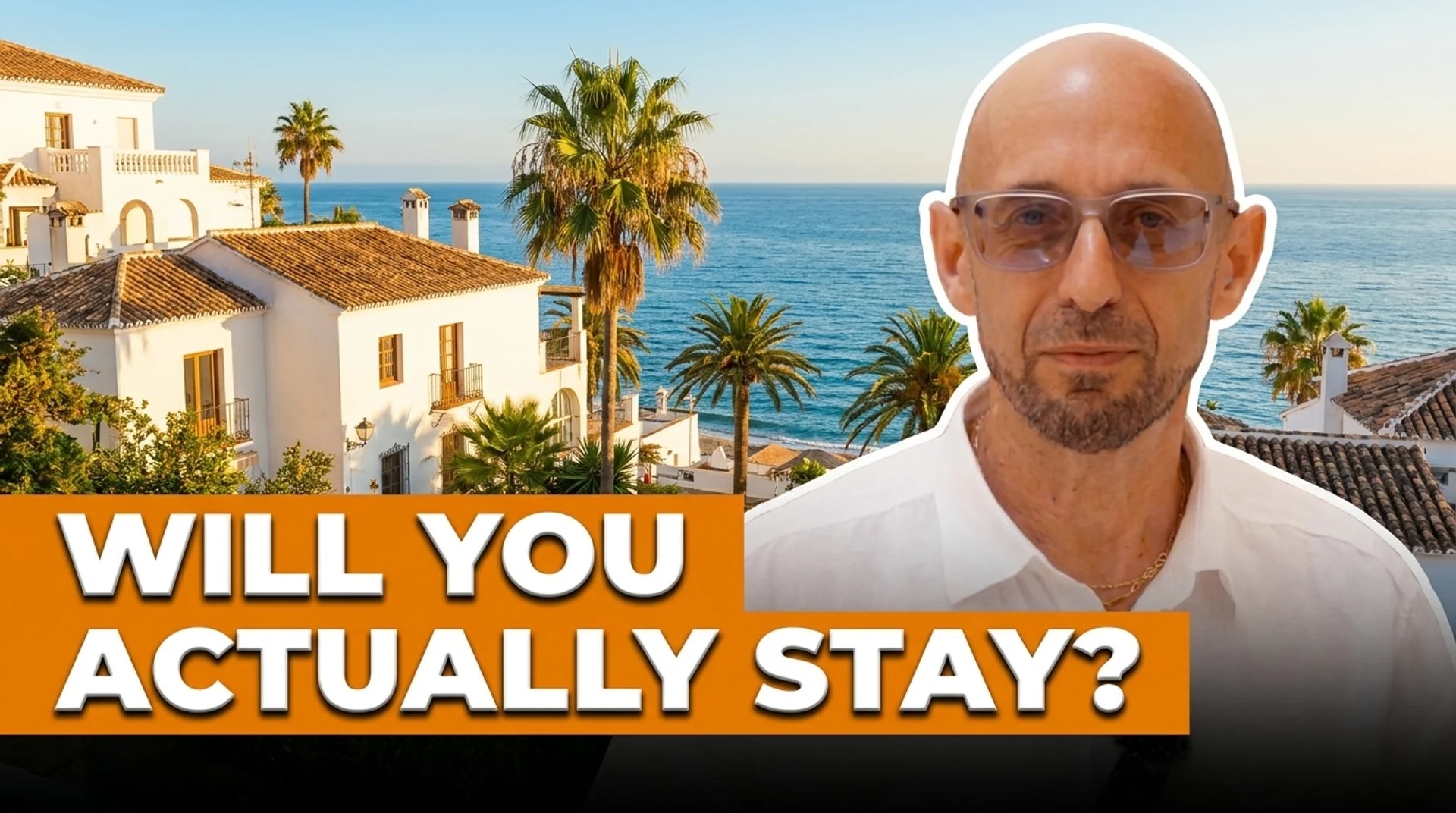
After 20 years helping people move to Spain, I can usually tell within about 10 minutes of meeting someone whether they’ll still be here in 5 years time.
It’s nothing to do with their budget. Nothing to do with where they buy. It comes down to one thing. And by the end of this post, you’ll know whether you’ve got it.
Whether you’re thinking about retiring to Spain, moving to Spain from the UK, relocating with your family, or exploring life here as a remote worker — this is the honest, unfiltered version of what life here is actually like. Not the brochure. Not the sales pitch. The reality.
Why People Really Want to Move to Spain
Everyone talks about the weather. The lifestyle. The food. And yes, those things are real. But after two decades of watching people arrive, settle in, thrive — and sometimes quietly pack up and go home — I don’t think sunshine is the real reason people move here.
What most people are actually searching for is something they’ve lost.
Time.
Time to slow down. Time to enjoy life. Time to spend with the people who matter.
One of the first things people notice when they arrive in Spain is that life moves at a different pace. Families spend more time together. Lunch isn’t a rushed sandwich at your desk. Dinner isn’t eaten at 5pm in front of the television. People work hard here — but they have a different relationship with time. There’s less of a feeling that every single minute has to be productive.
For a lot of people, that’s the real dream.
The Five Things People Fall in Love With
1. Outdoor Living
In most countries, living outside is something you get a couple of weeks a year if you’re lucky. In Spain it becomes part of everyday life. Breakfast by the beach, lunch outside, an evening walk, meeting friends in a plaza, dinner on the terrace. It sounds simple but it fundamentally changes your daily routine.
2. Health and Wellbeing
Spain doesn’t have a magic secret. But the lifestyle nudges you into healthier habits. You walk more. You’re outside more. You’re more active. Many people find they simply feel better after the move — and it’s not hard to see why.
3. Work-Life Balance
People arrive here tired. Tired of rushing, tired of commuting, tired of working towards the next weekend, the next holiday, the next milestone. Life in Spain allows you to enjoy a bit more of the journey along the way.
4. Affordability and Cost of Living
For many people moving to Spain from the UK or Northern Europe, their budget stretches further here. Whether that’s true depends on where and how you live — but a significant number of expats feel they get a better quality of life for the same money as back home. Dining out, fresh food, and everyday leisure tend to be noticeably more affordable, particularly outside the most tourist-heavy areas.
5. A Different Relationship With Time
Put it all together — more time, more outdoor living, a healthier rhythm, better work-life balance, more value for money — and it’s easy to see why so many people dream about moving to Spain permanently. Because they’re not really chasing sunshine. They’re chasing a different way of living.
💡 Thinking about making the move? Download our free Costa del Sol Property Buyers Guide — honest advice, no pressure, no spam. Get the free guide →
The Reality: What They Don’t Put in the Brochure
Here’s the thing. Spain doesn’t change who you are. It gives you a different place to be yourself.
You’ll still have challenges. You’ll still have responsibilities. You’ll still have frustrating days. The difference is what those things feel like.
So let’s talk about the parts the brochure leaves out.
Bureaucracy
The first reality check for many people isn’t the heat. It’s sitting in the town hall wondering why something that took 10 minutes back home suddenly needs three appointments and five different forms. Nothing is usually impossible. It just takes longer and more steps than people expect. Getting organised early — with a good gestor (a Spanish administrative professional) on your side — makes a significant difference.
Banking
People arrive assuming it works exactly the same as back home. Sometimes it does. Sometimes it doesn’t. Small differences in processes, requirements, and those dreaded Spanish banking fees catch people out more often than you’d think.
Taxes
Taxes surprise people — not because they’re higher, but because they’re different. Different systems, different rules, different expectations. As a Spanish tax resident you are liable to declare your worldwide income, and there are specific obligations around overseas assets. Understanding this early — ideally before you move — makes life a lot easier later on. The Agencia Tributaria website is the official source for tax information in Spain.
Healthcare
The Spanish healthcare system is generally very good. It just doesn’t always work the way you’re used to. There are different routes depending on your residency status — public healthcare via the Spanish Social Security system or private health insurance, which is relatively affordable and gives faster access to specialists. Understanding which route is right for you is an important early decision.
Summer Heat
30°C is perfect when you’re visiting. 40°C in August is a completely different conversation. If you can, spend a full summer in your chosen area before committing to a purchase — it tells you a lot.
Noise and the Social Rhythm
Spain is a social country. Life happens outside. Families gather, restaurants stay busy late, children play in the streets, festivals happen everywhere. For a lot of people that’s exactly what they move here for. For others it takes a little while to adjust to the rhythm.
Driving
Road habits, parking culture, and local nuances feel different here. Stopping on a roundabout with your hazard lights on — what locals call un momentito — is one of many small things that takes some getting used to. Not better or worse. Just different enough to notice.
Property Ownership
Community fees, urbanisation costs, shared pools, gardens, security, and maintenance are all part of the reality of living on many Spanish developments — and not always part of people’s expectations when they first start looking. A good NIE number and independent legal advice are essential before you buy anything. We cover the full buying process in our free Buyers Guide.
The Language
You can live in many parts of Spain — particularly expat-heavy areas like Marbella, Estepona, and Nerja — speaking very little Spanish. Plenty of people do. But if you truly want to feel part of the community, even a basic level makes an enormous difference. It also makes everyday tasks like banking and dealing with local authorities significantly easier.
Loneliness
This is the one nobody talks about — and it catches more people out than almost anything else on this list.
Moving to Spain permanently is exciting. It’s also a full reset of your entire social world. In expat-heavy areas there’s an added layer: things can feel temporary. You meet people, form friendships, settle into routines — and then people move on, go home, or move into a different stage of life.
I had a client who moved here after retiring. His first few years were much harder than expected. At one point he wondered if he’d made a mistake. Fast forward a few years and he’s one of the happiest people I know here. Why? Because he stopped comparing things to home and started embracing where he was.
That’s the thread running through all of this.
The Two Couples Story
A few years ago we had two couples buy homes just minutes from each other on the Costa del Sol. Similar budgets, similar ages, similar reasons for moving to Spain.
A year later, one couple couldn’t imagine living anywhere else. The other had gone home.
It wasn’t the area. It wasn’t the weather. It was expectations.
One couple arrived open to something different. The other spent the whole year wishing things worked like they did back home.
I’ve seen this story play out more times than I can count. The place almost never decides it. The mindset does.
Who Actually Thrives in Spain?
The pros and cons of living in Spain are well documented. But the thing that decides which side you end up on isn’t circumstances — it’s attitude.
The people who thrive here aren’t the ones who find everything easy. They’re the ones who adapt. There’s a certain mindset that does really well:
- People who value lifestyle over routine
- People who enjoy living outdoors
- People who don’t mind things slowing down a little
- People who can sit with uncertainty as long as the overall quality of life feels better
- People who arrive expecting things to be different — and are genuinely open to that
We see it with retirees who can choose how to spend their time. We see it with remote workers who can take their lives with them. And we see it with young families looking for a different rhythm for their children.
It’s not about circumstance. It’s about attitude.
The One Question That Decides Everything
Remember what I said at the beginning? The one thing I can tell in about 10 minutes?
It’s not budget. It’s not location. It’s the answer to this question:
Are you looking for a new version of your old life — or are you open to building a slightly different one?
If your honest answer is the second one, Spain might be exactly what you’re looking for.
Your Free Next Step
If you read all of that and thought yes, I think I’m the open to something different type — here’s what I’d suggest doing next.
I’ve put together a free Costa del Sol Property Buyers Guide and a Property Alert List for the area we know better than anywhere. No spam, no pressure. Just honest advice and a heads up when the right kind of home comes up.
👉 Download the free Buyers Guide 👉 Join the Property Alert List
And if you’ve got questions about the move, the legals, the area, or anything else — drop them in the comments below. I read every single one.
Frequently Asked Questions About Moving to Spain
How long does it take to get an NIE number in Spain?
Getting an NIE (Número de Identidad de Extranjero) typically takes between one and four weeks depending on where you apply and how busy the local office is. You can apply in person at a Spanish National Police station or, in some cases, through a Spanish consulate in your home country before you move. Many people use a gestor to handle the process on their behalf, which saves considerable time and stress.
Do I need to speak Spanish to live on the Costa del Sol?
You can live comfortably in many parts of the Costa del Sol speaking very little Spanish — particularly in expat-heavy areas like Marbella, Estepona, and Nerja where English is widely spoken. That said, even a basic level of Spanish makes an enormous difference to how connected you feel to the local community. It also makes everyday tasks — banking, healthcare, dealing with local authorities — significantly easier.
What is the cost of living in Spain for expats?
The cost of living in Spain varies significantly depending on where you live and how you live. Many expats find their budget stretches further than it did back home, particularly when it comes to dining out, fresh food, and everyday leisure. As a general rule, utilities, groceries, and eating out tend to be more affordable than in the UK or Northern Europe, though this gap has narrowed in recent years. Property costs on the Costa del Sol range considerably depending on the area and type of home.
Can I access Spanish healthcare as a foreign resident?
Yes, as a legal resident in Spain you can register with the Spanish public healthcare system. The quality of care is generally very good, though the system works differently to what many expats are used to. Many residents also choose to take out private health insurance, which is relatively affordable in Spain and gives faster access to specialists. The right route depends on your residency status, employment situation, and personal circumstances.
What taxes do expats pay in Spain?
Tax in Spain works differently to most Northern European countries and surprises a lot of new arrivals — not because rates are necessarily higher, but because the system and rules are different. As a Spanish tax resident (generally anyone spending more than 183 days per year in Spain) you are liable to declare your worldwide income. Spain also has wealth tax, inheritance tax rules that vary by region, and specific obligations around declaring overseas assets. Working with a qualified Spanish tax advisor early is one of the most important steps you can take.
Is it safe to buy property in Spain as a foreigner?
Yes — buying property in Spain as a foreigner is a well established and legally straightforward process when done correctly. The key is ensuring you have independent legal representation separate from the estate agent and developer. Issues can and do arise — particularly around planning permissions, community debts, and urbanisation legality — but these are almost always avoidable with the right professional advice in place from the start.
What is the process for buying property on the Costa del Sol?
The buying process in Spain follows a set sequence. You will need an NIE number before you can complete a purchase. The process typically involves a reservation agreement and deposit, followed by a private purchase contract, and then completion before a notary. Buying costs in Spain typically add around 10-13% on top of the purchase price, covering transfer tax or VAT depending on whether the property is new or resale, plus notary, registry, and legal fees. We cover all of this in detail in our free Buyers Guide. (add link)
How long does it take to move to Spain permanently?
It depends on your nationality and circumstances. EU citizens have the right to live and work in Spain and simply need to register as a resident once they arrive. Non-EU citizens, including UK nationals post-Brexit, need to apply for the appropriate visa or residency permit before moving. The most common route for non-working movers is the Non-Lucrative Visa, which requires proof of sufficient financial means. Processing times typically take between one and three months.
What are the pros and cons of retiring to Spain?
The pros are well documented — lifestyle, climate, outdoor living, affordability, and a slower pace of life that many retirees find transformative. The cons are less talked about but equally real: bureaucracy, a different healthcare system, the challenge of building a new social life from scratch, and the emotional adjustment of living away from family and lifelong friends. The retirees who thrive here are almost always the ones who arrive with realistic expectations and an open mind.
Is the Costa del Sol a good place to live permanently?
The Costa del Sol is one of the most established expat destinations in Europe for good reason. It offers over 300 days of sunshine per year, excellent international infrastructure, good transport links including Málaga International Airport, a wide range of property options, and a large, well-connected expat community. Areas like Marbella, Estepona, Nerja, and the villages of the Axarquía each offer a distinct character and lifestyle. Whether it’s the right fit depends entirely on what you’re looking for — which is exactly what this guide is designed to help you work out.
Further Reading and Useful Resources
- Spain’s official NIE and residency information — Ministry of Interior
- Agencia Tributaria — Spain’s tax authority
- Spanish Social Security — for understanding healthcare access routes
- The Local Spain — reliable English language news and expat advice
Keith is the founder of Target Property Spain, with over 20 years of experience helping people buy property and relocate to the Costa del Sol. Covering Marbella, Málaga, Estepona, Nerja and the wider Andalusia region, Target Property Spain specialises in honest advice, local knowledge and zero sales pressure.
Subscribe to the YouTube channel for more honest content on buying property and living in Spain.